Essential Utility Data API Requirements (Part 3)
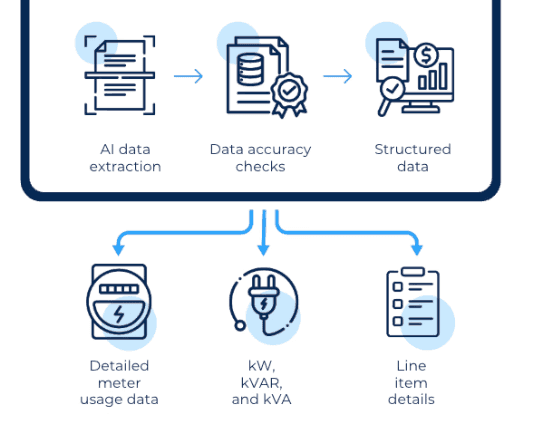
This is the final installment in our three-part series on essential utility data API requirements. In Part 1, we covered the data granularity and accuracy needed to support strategic energy decisions. In Part 2, we examined the reliability and integration standards that keep data flowing without disruption. Now we turn to the third pillar: unified data that serves every stakeholder in an organization.
Unified data drives strategic decisions
Energy data in most organizations is fragmented. Brokers track procurement costs in one system, sustainability managers calculate emissions in another, and facilities teams monitor consumption in a third. When these teams need to collaborate — on budget planning, regulatory reporting, or efficiency projects — they spend more time reconciling spreadsheets than making decisions.
A well-designed utility data API eliminates this fragmentation by providing a single, standardized data source that every stakeholder can access. The same consumption figures that feed a broker's procurement analysis also feed a sustainability manager's emissions calculations and a facilities team's benchmarking reports. No version conflicts, no reconciliation overhead, no gaps between departments.
Core features for unified data access
Standardized data formats
Utility providers deliver data in wildly different formats — CSV exports, PDF bills, online portals, EDI feeds. A unified API normalizes all of this into a consistent schema, so downstream consumers receive the same data structure regardless of the source utility. This eliminates the custom parsing and transformation work that plagues multi-utility portfolios.
Usage and demand data
Beyond billing totals, stakeholders need access to consumption volumes (kWh, therms, gallons), demand readings (kW), and time-of-use breakdowns. Brokers use this data for load profiling and rate negotiations. Facilities teams use it for efficiency benchmarking. Finance teams use it for cost allocation. A single API endpoint should serve all of these needs.
Scope 1 and Scope 2 emissions data
Sustainability teams need consumption data mapped to emission factors for accurate carbon accounting. A unified data API that delivers both raw consumption and calculated emissions saves teams from maintaining separate conversion pipelines and reduces the risk of methodology inconsistencies across reporting periods.
Historical data access
Strategic decisions require trend analysis. Whether evaluating the impact of an efficiency retrofit, modeling future energy costs, or tracking progress against a sustainability target, stakeholders need access to years of historical data — not just the most recent billing period.
Nectar's unified data advantage
Nectar's API is designed to serve the full spectrum of energy professionals within an organization. The platform collects data from over 7,000 utility providers, normalizes it into a standardized schema, and delivers it through a single API that supports billing, consumption, demand, cost, and emissions queries. Whether a broker is pulling load profiles for a procurement RFP, a sustainability manager is compiling Scope 2 inventories, or a finance team is building energy budgets, the data comes from the same source and tells the same story.
Going beyond data accessibility
Unified data is not just about convenience — it changes how organizations operate. When every team works from the same numbers, disagreements shrink. When historical data is always available, trend analysis happens naturally. When the API handles normalization and delivery, internal teams can focus on analysis and decision-making rather than data wrangling.
This concludes our three-part series on essential utility data API requirements. Together, comprehensive and accurate data, reliable and integrated delivery, and unified access for all stakeholders form the foundation that energy professionals need to do their best work.