Essential Utility Data API Requirements (Part 2)
In Part 1 of this series, we explored the data granularity and accuracy requirements that form the foundation of an effective utility data API. But even the most comprehensive data is useless if the delivery mechanism is unreliable, insecure, or difficult to integrate. For energy brokers, sustainability managers, and consultants who depend on continuous data access to serve their clients and meet reporting deadlines, reliability is not a feature — it is a requirement.
Why reliability and integration matter
Energy professionals build workflows, reports, and client deliverables on top of utility data. When the data pipeline breaks — a missed scrape, a failed authentication, an unhandled format change — the downstream impact is immediate. Reports are delayed, analyses are incomplete, and clients lose confidence. The difference between a utility data API that works most of the time and one that works all of the time is the difference between a tool teams tolerate and one they trust.
Must-have features for reliable data delivery
Automatic updates and monitoring
A reliable API does not wait for users to request data. It proactively collects new bills as they become available, monitors for changes, and pushes updates through webhooks or polling endpoints. When a utility provider changes their portal layout, updates their authentication flow, or introduces a new bill format, the platform should adapt without requiring users to file support tickets.
Robust error handling and recovery
Failures are inevitable in any system that connects to thousands of external data sources. What matters is how the system responds. A well-designed API retries failed collections, provides clear error reporting, and alerts users when intervention is needed — such as when a utility account password expires or a provider requires manual verification. Transparency about data freshness and collection status is essential.
Secure data transmission
Utility billing data contains sensitive financial and operational information. End-to-end encryption, role-based access controls, and compliance with standards like SOC 2 are baseline expectations. Organizations handling data across multiple clients — common for brokers and consultants — need confidence that client data is isolated and protected.
User-friendly onboarding with MFA support
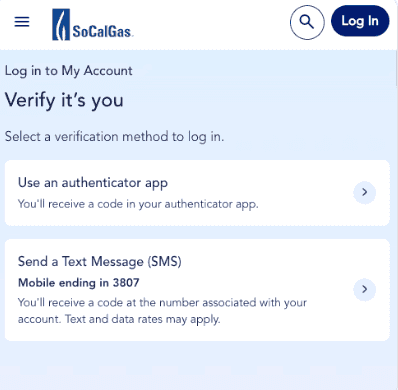
The initial account connection process is often the biggest friction point in utility data platforms. Users must enter credentials for utility portals that frequently require multi-factor authentication. A smooth onboarding experience that handles MFA workflows — including SMS codes, email verification, and authenticator apps — dramatically improves adoption rates and reduces support overhead.
How Nectar ensures reliability
Nectar's platform is built around the principle that data should flow without manual intervention. The system continuously monitors connections to over 7,000 utility providers, automatically adapts to portal changes, retries failed collections with intelligent backoff strategies, and provides real-time status dashboards so users always know the state of their data. MFA support is built into the onboarding flow, and credential management is handled securely on the platform side.
When issues do arise, Nectar's monitoring detects them before users do. The engineering team maintains provider-specific adapters that are updated as utilities change their systems, minimizing disruption to downstream consumers.
A continuous commitment
Reliability is not a feature that is built once and forgotten. Utility providers change their portals, update their authentication systems, and introduce new bill formats on an ongoing basis. Maintaining reliable data delivery requires dedicated engineering effort and continuous investment in monitoring and adaptation.
In Part 3 of this series, we will explore the final pillar of essential utility data API requirements: unified data that serves every stakeholder in an organization — from brokers and consultants to sustainability managers and finance teams.