Constellation Alternative | Nectar
Nectar provides vendor-neutral utility data management that works with any energy supplier. Get unbiased rate analysis, automated bill auditing, and complete data portability without supplier lock-in.

Constellation is an energy supplier, and its customer platform reflects that. Reporting and analytics exist to support the supply relationship, which is useful while you are a customer and structurally limited as a data strategy.
Two consequences follow. The first is a conflict of interest that is inherent rather than intentional: a supplier-owned platform is not the neutral party to tell you whether your rate is optimal or whether a competing supply offer is better. The second is portability: when the supply contract ends, the platform relationship generally ends with it, and the historical data can go too.
Nectar holds no position on which supplier you choose. We collect from more than 7,000 utility providers and suppliers globally, parse every line item, and hold the data independently of any supply arrangement, so switching suppliers, brokers, or consultants does not cost you a single data point. Nectar does not sell energy and does not take a market position. Where a customer wants procurement help we route them to brokers in our partner network, and the customer picks the partner and the supplier; the analysis of what your current tariff is costing you does not change based on that choice.
Challenge
Supplier-owned platforms create conflicts of interest in rate analysis.
Solution
Nectar is vendor-neutral: our rate optimization recommendations are based purely on your data, not supplier incentives.
Challenge
Switching energy suppliers means losing access to your historical data.
Solution
Your data lives in Nectar regardless of supplier. Switch providers without losing history or analytics.
Challenge
Supplier reporting portals offer limited analytics and no cross-portfolio views.
Solution
Nectar provides portfolio-wide analytics, benchmarking, and rate comparisons across all suppliers and commodity types in a single dashboard.
Why supplier neutrality changes the analysis
Rate and tariff optimization only means something if the party performing it is not selling you the outcome. A supplier can identify inefficiencies within its own product set; it has no reason to surface the finding that a different structure or a different supplier would cost less. That is a structural limit, not a criticism of any particular vendor.
Independent line-item parsing produces the analysis either way: demand charges, minimum-demand provisions, riders, power factor penalties, and tax treatment separated out and compared against the applicable tariff. That is also what makes billing error detection possible: an error is a discrepancy between what the tariff says and what the bill charged, which requires holding both independently.
Where Nectar fits
A supplier portal is a useful account tool and a poor system of record. Choose Nectar when you need utility data that outlives any single supply contract, rate analysis from a party with no stake in the answer, and one consistent view across every supplier your portfolio uses.
Frequently asked questions
Can we keep Constellation as our supplier and use Nectar for data?
Yes, and that is the normal arrangement. Nectar is a data layer, not a supply relationship. It collects from whichever suppliers and utilities serve your sites and keeps working unchanged when you switch any of them.
Does Nectar broker energy supply?
No. Nectar does not sell energy, hold supply contracts, or take a market position. Procurement advisory is available through brokers and consultants in our partner network, chosen by the customer, and brokers are also frequently Nectar customers buying the data feed to serve their own clients. Either way the tariff analysis is the same: what your current rate structure costs against what the published tariff says it should.
What happens to historical data when we change suppliers?
Nothing. The dataset lives in Nectar with its audit trail, independent of any supply contract, which is the specific failure mode of relying on a supplier portal as your system of record.
Can Nectar handle multiple suppliers across one portfolio?
Yes, and multi-supplier portfolios are a common case. Deregulated markets frequently mean different suppliers per site, and one platform covering all of them is the only way to get a consistent portfolio view.
One platform for every utility decision
Utility bill management, energy cost management and procurement, and sustainability reporting in one system, shared by energy, finance, operations, and sustainability teams.
Utility bill management
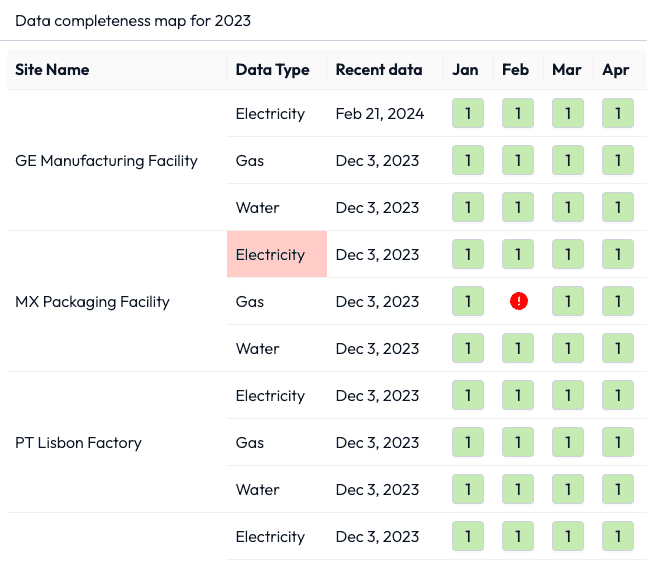
Every bill for every utility, waste, and telecom account collected, parsed at the line-item level, and tracked against its expected date.
Automated bill collectionData completenessAudit trailAI agent and smart reports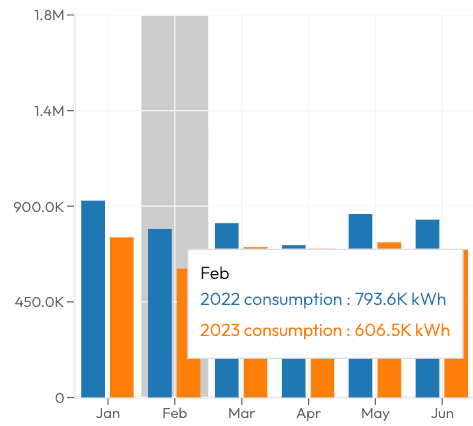
Sustainability reporting and benchmarks
Audit-ready data for ESG reporting, site benchmarks, ENERGY STAR sync, and exports to carbon accounting platforms.
BenchmarksENERGY STAR Portfolio ManagerESG and carbon integrationsWaste and recycling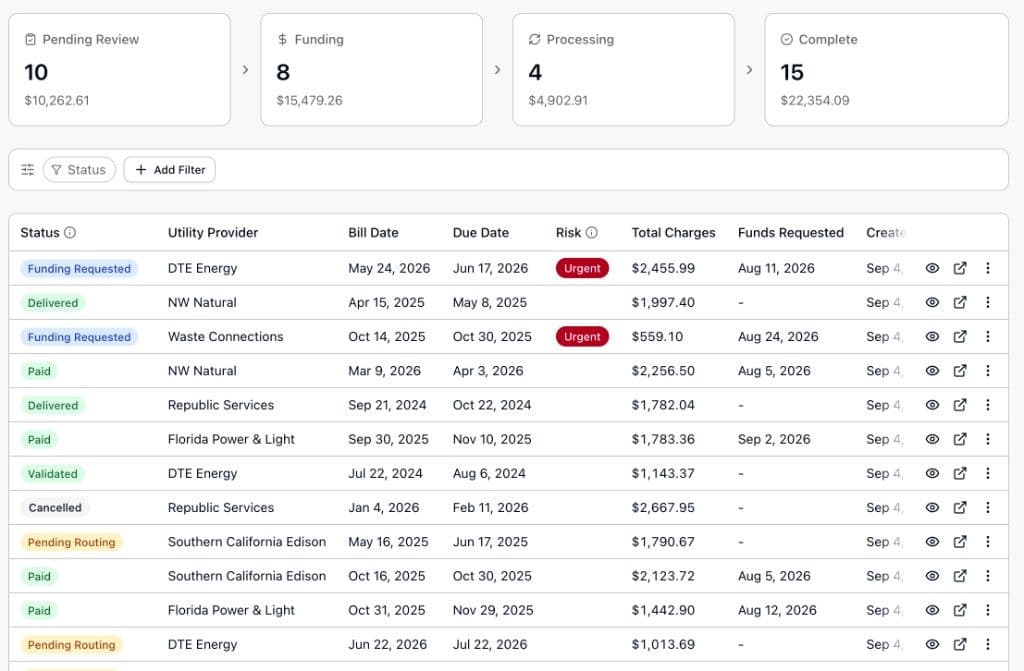
Bill audit, bill pay, and AP
Errors caught before payment, past overcharges recovered, and validated bills paid on time or delivered to your AP system.
Utility bill auditsHistorical bill auditUtility bill paymentsAP and ERP integration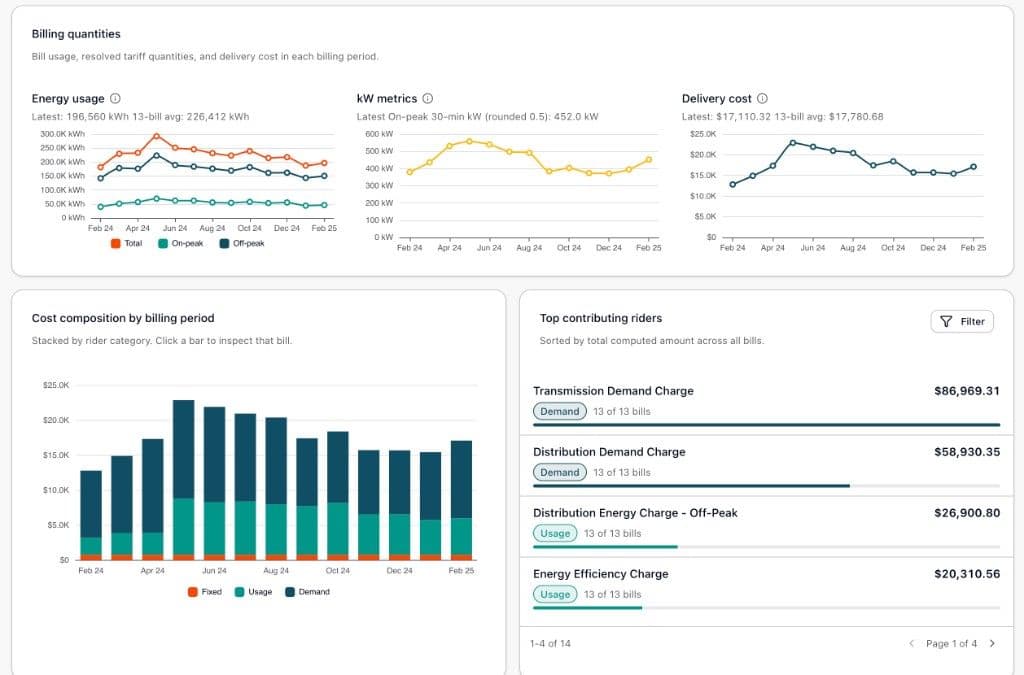
Energy cost management and procurement
Tariff and rate optimization, demand management, and procurement advisory. Customers typically save 3 to 5% of annual utility spend.
Tariff and rate optimizationDemand managementProcurement advisoryBudgeting and forecastsLoved by customers in every industry
Customer StoriesHow Thomas Foods automated more than 90% of its utility data collection
Thomas Foods International uses Nectar to collect and organize utility data across its US facilities, replacing manual bill downloads and spreadsheet entry.
“Using Nectar has significantly streamlined the process of gathering and analyzing our utility data. The platform just works!”

Jonathan R.
Sustainability Director, Thomas Foods Int., USA
Stanwich Energy Boosts Client Value with Nectar's Utility Data Solution
Stanwich Energy announces a new partnership with Nectar to enhance the customer experience through advanced, AI-powered utility data services.
“Partnering with Nectar's AI-driven platform has been groundbreaking, allowing us to tackle changes faster and skip the outdated, painful integration required by other solutions. Having the right information is the first step, and Nectar is exactly what we have been looking for to make that happen.”

Matt Shaw
Managing Director, Stanwich Energy

Jeremy Pike
Sustainability Leader, Idaho Milk Products
“Thanks to Nectar's innovative solution, we can accurately assess our environmental impact, becoming a pioneer in sustainability among our peers.”

John O'Connell
CEO and Founder, Stanwich Energy
“Nectar enables faster insights, smarter forecasting, and more accurate budget tracking. It also strengthens our ability to deliver on key sustainability goals by providing real-time visibility into usage and emissions.”

Matt Greening
Founder and Director, Nettzero
“Nectar serves as a reliable and cost-effective technology solution to extract, store, and analyse sustainability data leading to enhanced reporting capabilities and streamlined workflows.”
Ready to get started with Nectar?
Try your utility bill on our live demo or get in touch
Learn more about Nectar
How hard can data collection get? What has worked for companies? We've got it all covered.
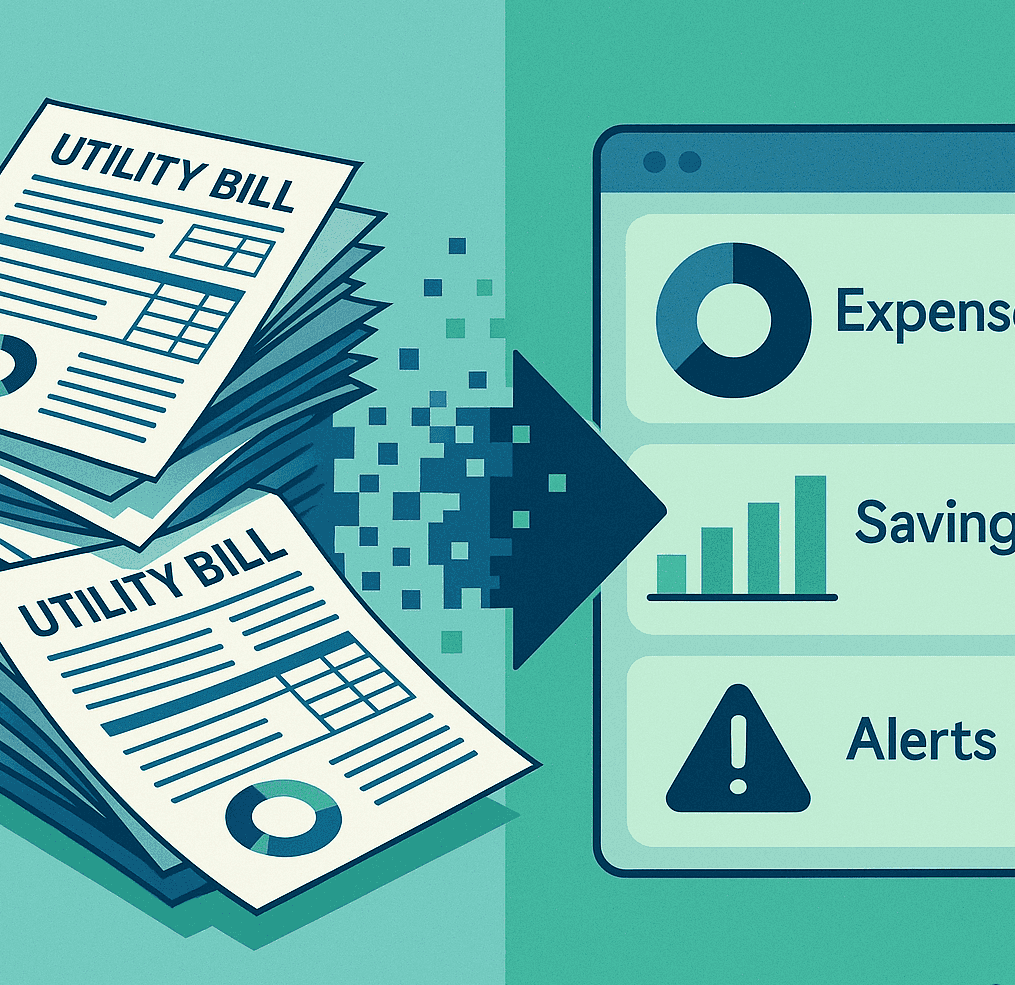
Utility bill management and AI
How AI changes utility bill management, from automated data extraction and anomaly detection to centralized control of utility spend across a portfolio.
Read more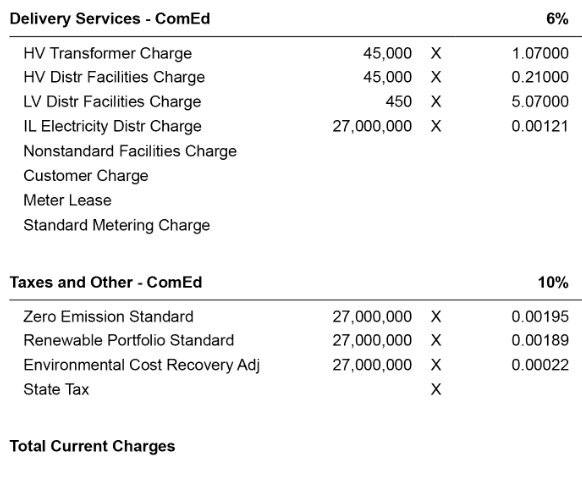
How Nectar parses granular utility cost data
How Nectar separates supply, delivery, and demand charges on every bill, so energy and finance teams can see exactly what drives utility spend.
Read more
Carbon accounting requires accurate utility data collection
Carbon accounting has 3 steps: data collection, emissions calculation, and data reporting. Error rates of 10% in data collection compound into worse error in the CDP report. Garbage in, garbage out.
Read more