Arcadia vs Watershed vs EnergyCAP
Data, carbon, and energy cost side by side. A sustainability lead building a full stack has to buy in all three layers, and knowing which is which saves a year.
A sustainability lead assembling a complete stack ends up with these three because they represent its three layers: a utility data source, a carbon accounting platform, and an energy cost management system. Comparing them against each other is a category error that costs real time in procurement.
What makes it worse is that each vendor can honestly claim partial coverage of the others. Arcadia’s data can feed anything. Watershed reports on energy cost adequately. EnergyCAP produces emissions figures from its consumption data. So the RFP responses look overlapping when the products are not.
The productive reframing is to specify each layer separately and then ask how they connect, because the connection is where these programs usually fail, not in the individual product choices.
The three are strong in their own layers. Arcadia, which absorbed Urjanet in 2022, consolidated two of the best-known utility data feeds behind one API, though it publishes no single coverage figure. Watershed carries audit-grade carbon methodology, CSRD support, and a Verdantix leadership position in enterprise carbon management. EnergyCAP brings four decades of utility cost accounting and benchmarks more than 16,000 properties in ENERGY STAR Portfolio Manager. A stack assembled from all three can work. The failure mode is assembling it on three separate copies of the underlying utility data.
Side by side
| Criterion | Nectar | Arcadia | Watershed | EnergyCAP |
|---|---|---|---|---|
| Delivery model | Software (SaaS) with API access | Developer-facing data API | Carbon accounting software | Software (SaaS) |
| Published provider coverage | 7,000+ globally | Not published as one figure | Not a collection platform | Not published |
| Published parsing accuracy | 99.2% | Not published | Not published | Not published |
| Line-item bill parsing | ✓ | Varies by provider | — | ✓ |
| Interval and meter-level data | ✓ | ✓ | — | Supported |
| Data completeness view | ✓ | You build it | Data request tracking | Reporting on missing bills |
| Audit trail to source bill | ✓ | Bill images via API | Depends on the source | Bill images stored |
| ENERGY STAR sync | ✓ | You build it | Via integration | ✓ |
| Carbon and ESG exports | 20+ integrations | You build it | ✓ | Supported |
| Scope 3 and supply-chain modeling | — | — | ✓ | — |
| Emissions calculation and disclosure | Exports to 20+ integrations | You build it | ✓ | Basic |
| Framework filing output (CSRD, ESRS, XBRL) | — | — | ✓ | — |
| Contract model | SaaS subscription, no lock-in | Usage-based API agreement | SaaS subscription | SaaS subscription |
Rows marked “via partner network” are delivered by Nectar partners (energy brokers, procurement consultants, and trading desks in the Nectar Marketplace of Solutions), rather than by Nectar directly. Bill pay is executed by Nectar or through an integrated payment provider depending on the customer.
Competitor details are taken from each vendor’s own published material and were accurate at the time of writing: Arcadia, Watershed, EnergyCAP.
What each vendor is actually good at
Arcadia
A utility data platform sold primarily as a developer API. Arcadia acquired Urjanet in 2022 and ENGIE Impact in 2026, consolidating utility data feeds and a managed service under one owner.
Best fit for
Product and engineering teams building an energy application who want the raw data feed and will build the workflow themselves.
Where Arcadia wins
- A mature, well-documented API with strong developer adoption
- Broad US coverage, expanded by absorbing the Urjanet base
- Interval data alongside billing data
- A large ecosystem of existing integrations
Where Nectar wins
- Nectar publishes a parsing accuracy figure and backs flagged bills with human QA
- Completeness is a product surface rather than something you build on top of an API
- Line-item parsing across demand, supply, delivery, taxes, and fees out of the box
- A usable application for energy and sustainability teams, not only an API
Watershed
An enterprise carbon accounting and climate disclosure platform, strong on measurement methodology, reduction planning, and regulatory-grade reporting.
Best fit for
Enterprises running a formal climate program who need defensible measurement and disclosure across all three scopes.
Where Watershed wins
- Rigorous methodology and strong credibility with disclosure frameworks
- Broad Scope 3 coverage and supplier engagement tooling
- Reduction planning and target setting alongside accounting
- Enterprise-grade program management
Where Nectar wins
- Nectar operates the utility collection layer Watershed depends on but does not run
- Line-item parsing so Scope 2 is metered rather than spend-estimated
- Completeness visible at site, account, and meter level
- An audit trail from every value back to its source bill
EnergyCAP
A long-established energy and utility bill accounting platform, strong in public sector, education, and government, with deep budgeting and cost-accounting features.
Best fit for
Energy managers who need rigorous utility cost accounting, budget variance, and chargeback against a defined organizational hierarchy.
Where EnergyCAP wins
- Mature utility cost accounting with deep budgeting and chargeback
- Long track record in public sector and higher education procurement
- Established GL and ERP integration patterns
- A large installed base and correspondingly deep domain features
Where Nectar wins
- Nectar automates collection from 7,000+ providers rather than relying on imports and manual entry
- AI parsing at 99.2% accuracy with human QA on flagged bills
- A data completeness view with one-click actions to close gaps
- A modern API for brokers and software companies consuming the feed
Specify the layers, then the joins
Write down three requirements. Collection: what percentage of bills arrive automatically, and how do I know what is missing? Cost: how do I explain a budget variance and reconcile to the general ledger? Carbon: what output does my audience need, and what will assurance test?
Most stack failures happen at the joins. Two systems each collecting their own data produces two consumption figures that disagree, and reconciling them becomes a recurring quarterly task nobody budgeted for. A carbon platform fed by manual exports drifts out of date the moment the person doing the exporting changes role.
One validated dataset feeding both cost and carbon removes both failure modes, which is why the collection layer deserves to be specified first even though it is the least visible of the three.
What assurance actually tests
When an assurance provider reviews a sustainability disclosure, they do not audit the platform. They sample reported figures and ask what evidence supports each one. A number that cannot be traced to an underlying record is a finding regardless of how sophisticated the system that produced it.
This is where the collection layer determines whether a reporting platform can be defended. If utility data arrived by spreadsheet, by manual entry, or by an integration that discarded the source document, the evidence chain has a hole in it that no amount of methodology closes.
Nectar retains the bill image, the parsed line items, the meter identifiers, and the service period together, so answering an assurance question is a lookup rather than an investigation, and estimated values are labeled as estimates rather than silently mixed with metered ones.
How stacks like this have converged on Nectar
Organizations that assembled this stack the hard way have tended to converge on the same repair. Sustainability leads at manufacturers and healthcare systems, whose sites bill across electricity, gas, water, sewer, steam, and waste, have switched their collection to Nectar because one pipeline parsing all 9 commodities replaced several partial ones, and their cost and carbon numbers finally came from the same dataset.
Energy managers who kept EnergyCAP for chargeback and budget variance have put Nectar underneath it after import-based collection failed quietly: a portal login changed, a staffer left, and the gap surfaced months later at a reporting deadline. Automated collection from 7,000+ providers with a live completeness view removed the single point of failure, and the cost system kept doing what it does well.
Teams that fed Watershed from spreadsheets have switched the feed to Nectar ahead of assurance, because audit-grade methodology on top of unverifiable inputs does not survive sampling. With line-item parsing at a published 99.2% accuracy, human QA on flagged bills, and a bill image behind every value, the number that reaches the carbon platform is the same defensible number that reaches the cost platform.
Where Nectar fits
Buy one of each layer rather than comparing across them: a data layer, a cost system, and a carbon platform. Specify collection first. It is the least visible layer and the one that determines whether your cost and carbon numbers ever agree. Nectar is built to be that layer: automated collection across 7,000+ providers and 9 commodities, 99.2% published parsing accuracy with human QA, a live completeness view, and exports that feed cost and carbon systems from one validated dataset. Teams that specified collection last have ended up rebuilding it; the 30-day free pilot exists so you can test it first instead.
Frequently asked questions
Which layer should we buy first?
Collection, in most cases, because both other layers degrade to guesswork without it, and because it is the layer that determines whether the numbers in the other two agree with each other.
Can EnergyCAP be our carbon platform too?
It will produce emissions figures from consumption. Whether that is sufficient depends on your audience and scopes: for Scope 1 and 2 internal reporting, often yes; for investor-facing all-scopes disclosure, usually not.
Can Watershed be our energy cost system?
It reports energy spend but is not a utility cost accounting system: no chargeback hierarchy, no general ledger reconciliation, no budget variance in the sense an energy manager means it.
How do we stop the layers disagreeing?
One collection layer feeding both. Nectar collects once, validates once, and exports to cost and carbon systems from the same dataset, so a consumption figure is the same number wherever it appears.
Can we keep EnergyCAP and still fix collection?
Yes, and that has been the most common arrangement: EnergyCAP keeps chargeback, budgeting, and GL reconciliation, and Nectar feeds it automatically collected, line-item-parsed bills. Teams that made that change stopped losing quarters to broken import routines without giving up the accounting depth they bought EnergyCAP for.
What usually breaks first in a three-vendor stack?
The joins. Two systems each collecting their own version of consumption produce numbers that disagree, and the reconciliation becomes a recurring task nobody owns. Specifying one validated collection layer first, with completeness visible and every value traceable, is what has kept these stacks from decaying.
Powerful features for every team
Nectar is a unified platform with features for every use case across finance, operations, and sustainability.
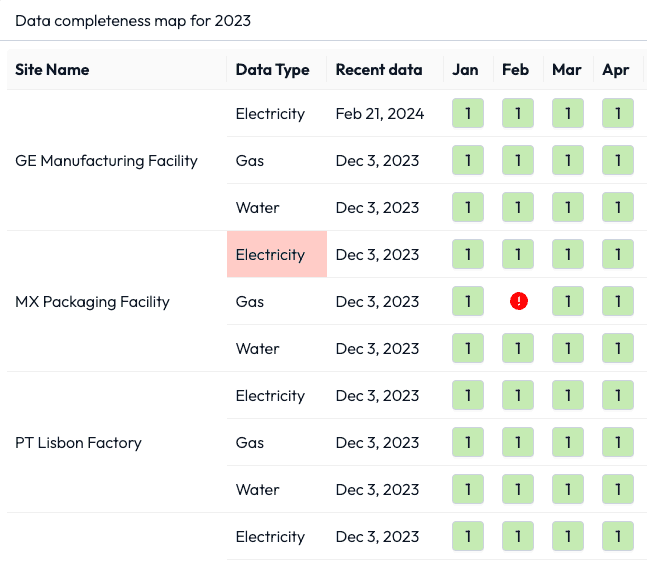
Data collection for sustainability
Reach 100% data completeness with ongoing monitoring and automations
Automated data collectionData completenessAudit trailCarbon accounting and reporting integrations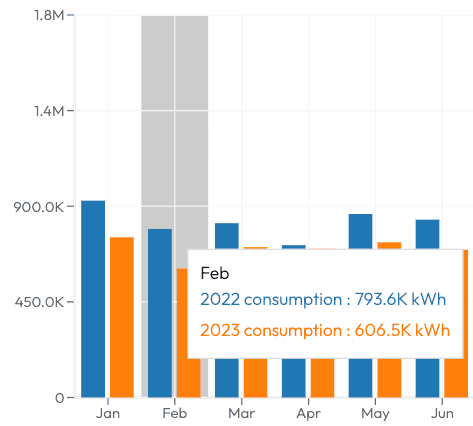
Facility benchmarks, Energystar reports
Compare and benchmark facilities. Report to Energystar
Benchmark facilities by usage or costEnergy Star Portfolio Manager and reporting requirements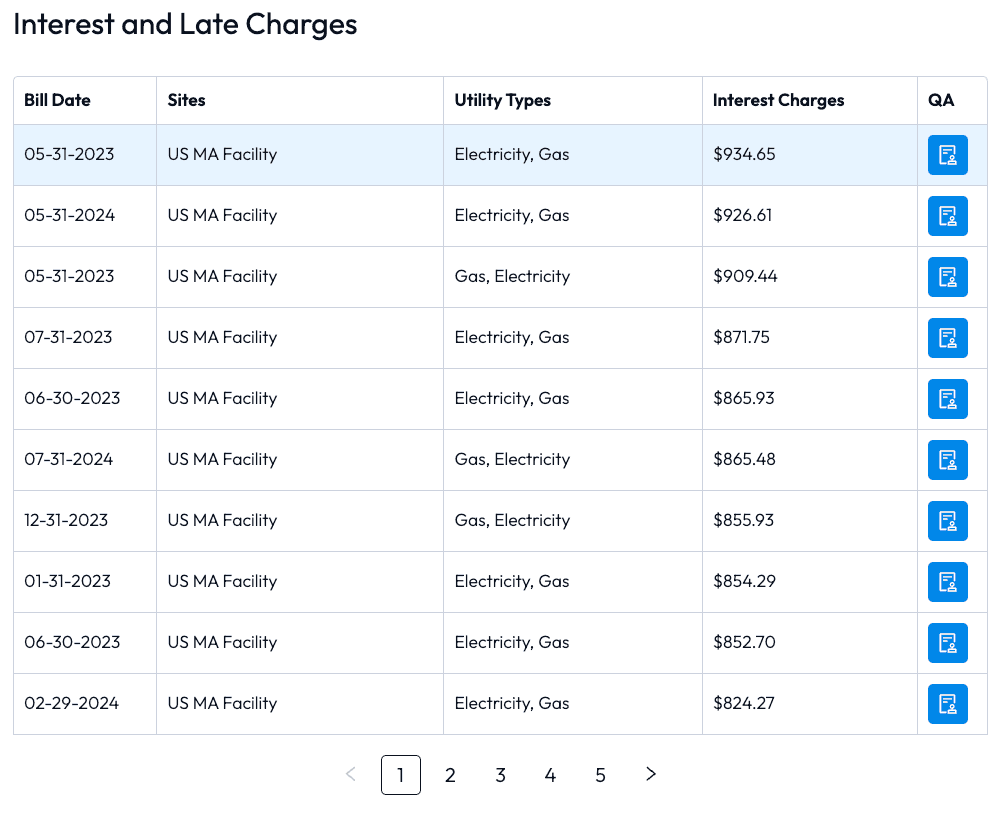
Utility bill audits, bill reconciliation
Audit bills for errors. Avoid late fees. Automate payments.
Interest and tax charge analysisUtility bill paymentsUtility bill audits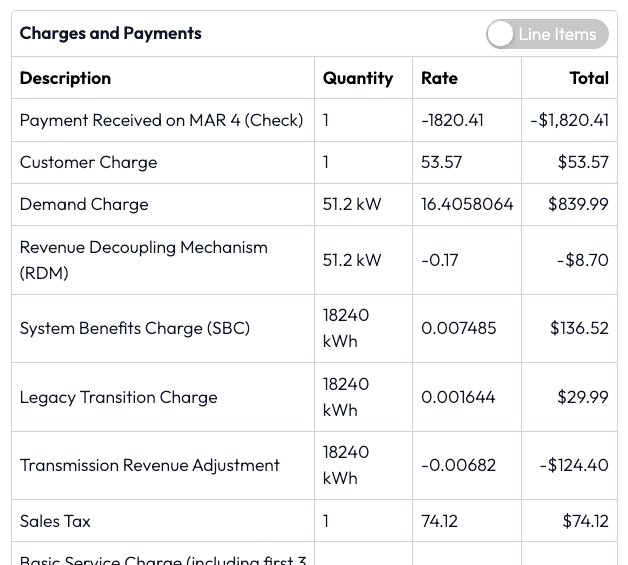
Rate optimizations, cost savings
Analyze utility tariffs. Optimize usage patterns. Capture savings.
Budgeting, forecasts, and planningRate and energy tariff optimizations, cost savingsLoved by customers in every industry
Customer StoriesVontier's ESG and sustainability team automates utility data collection globally
Vontier implemented Nectar across 20+ locations in 5 continents to automate data collection into their ESG platform. Learn more about how Nectar provides more accurate data and visibility into metrics.
“Nectar has transformed how we manage sustainability data. It's reduced human errors, missing data sources, delays from manual data entry, and confusion regarding unit conversions.”

Nate Streed
Senior Director of ESG, Vontier Corporation
Stanwich Energy Boosts Client Value with Nectar's Utility Data Solution
Stanwich Energy announces a new partnership with Nectar to enhance the customer experience through advanced, AI-powered utility data services.
“Partnering with Nectar's AI-driven platform has been groundbreaking, allowing us to tackle changes faster and skip the outdated, painful integration required by other solutions. Having the right information is the first step, and Nectar is exactly what we have been looking for to make that happen.”

Matt Shaw
Managing Director, Stanwich Energy

Nancy Summe
Sustainability Manager, Vontier Corporation
“It's becoming clear that automation is a game changer—providing more accurate data, greater auditability in metrics and reporting, and saving time across a global team.”

Lexi Passmore
Senior Manager Sustainability, Swire Coca Cola
“Having access to organized, centralized utility data through Nectar has made sustainability data management significantly easier. The ability to quickly retrieve supporting documents ensures the highest level of accuracy in our reporting.”

Jeremy Pike
Sustainability Leader, Idaho Milk Products
“Thanks to Nectar's innovative solution, we can accurately assess our environmental impact, becoming a pioneer in sustainability among our peers.”

Jonathan R.
Sustainability Director, Thomas Foods Int., USA
“Using Nectar has significantly streamlined the process of gathering and analyzing our utility data. The platform just works!”

John O'Connell
CEO and Founder, Stanwich Energy
“Nectar enables faster insights, smarter forecasting, and more accurate budget tracking. It also strengthens our ability to deliver on key sustainability goals by providing real-time visibility into usage and emissions.”

Matt Greening
Founder and Director, Nettzero
“Nectar serves as a reliable and cost-effective technology solution to extract, store, and analyse sustainability data leading to enhanced reporting capabilities and streamlined workflows.”
Thinking of switching?
If Arcadia, Watershed, or EnergyCAP are on your shortlist, the cheapest way to settle it is to run Nectar alongside them. A 30-day free pilot on up to 30 accounts or 200 bills, using your real invoices. No contract, no commercial commitment, and nothing to unpick if you decide against it. You keep whatever data we collect either way.
Learn more about Nectar
How hard can data collection get? What has worked for companies? We've got it all covered.

How Vontier automated utility data collection across 5 continents
Vontier implemented Nectar across 20+ locations in 5 continents to automate data collection into their ESG platform. Learn more about how Nectar provided more accurate data and greater audibility in metrics.
Read more
Carbon accounting requires accurate utility data collection
Carbon accounting has 3 steps: data collection, emissions calculation, and data reporting. Error rates of 10% in data collection compound into worse error in the CDP report. Garbage in, garbage out.
Read more
Nettzero partners with Nectar to simplify sustainability reporting
Nettzero, an Australian sustainability consultancy, chose Nectar to partner with for sustainability reporting. Learn more about the challenges Nectar solves.
Read more