An Open, Public Tariff Database for US Utilities by 2027
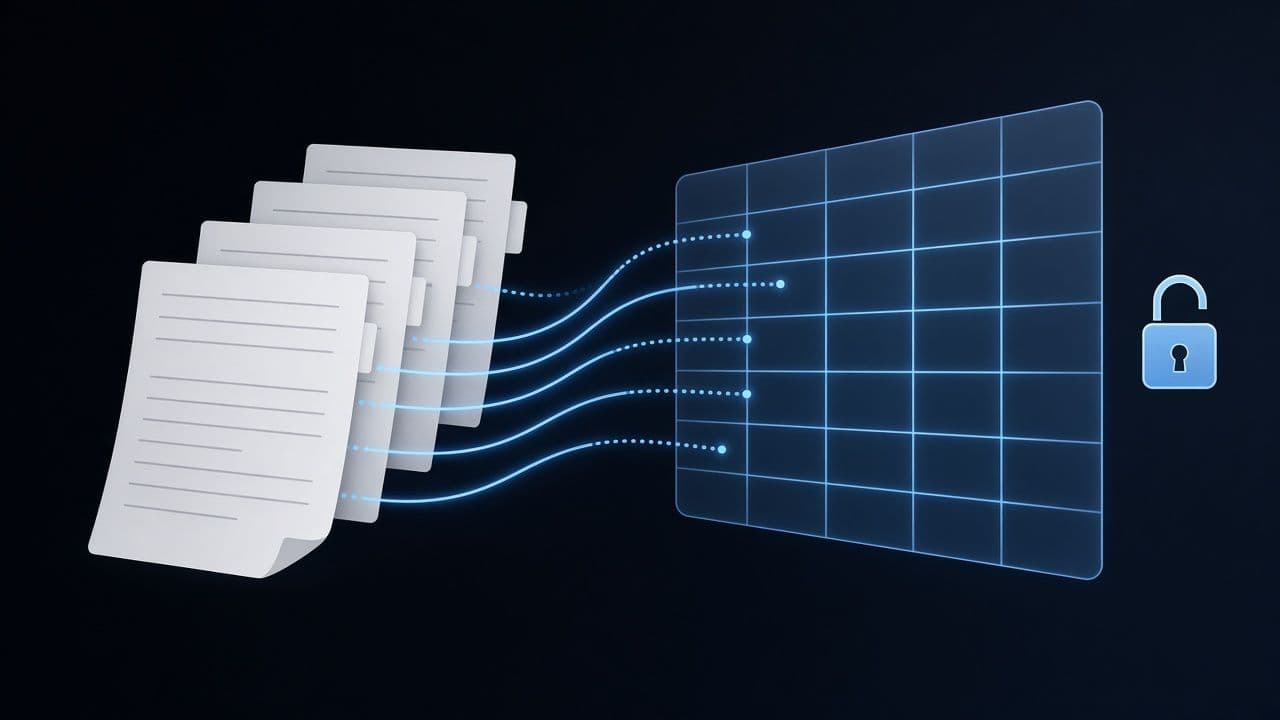
Every commercial electricity bill in the United States is computed from a tariff: a rate schedule filed with a state regulator, plus a set of riders and adjustments that change throughout the year. Tariffs are public by law. Anyone can download them. Almost nobody can use them.
By the end of 2027, Nectar will publish a free, open database of US utility tariffs and riders. Every value will cite the page of the filing it came from. The data will be in the public domain, available as a bulk download and a free API, and usable directly by AI assistants like Claude through an open plugin. Here's why we're doing it, what will be in it, and how to work with us on it.
Public, but not usable
A commercial electric bill is rarely the product of one rate schedule. It's the base schedule plus a stack of riders: fuel and purchased power adjustments, transmission charges, energy efficiency surcharges, storm recovery charges, and public purpose programs. Each one has its own effective dates and its own revision schedule. In deregulated states, the supply portion may come from a separate supplier contract entirely.
All of it is published, usually as PDFs. A single utility's tariff book can run to hundreds of pages, amended sheet by sheet. To compute one bill correctly, you need the right version of every sheet that applied during the billing period.
The result is a quiet, expensive duplication. Energy managers, brokers, consultants, solar and storage developers, software companies, and researchers each rebuild the same dataset privately, for the utilities they care about, and each copy goes stale on its own schedule. Teams that can't afford to do this fall back on averages. Most organizations end up paying utility invoices they can't fully check. That gap between what is public and what is usable is the reason Nectar exists, and tariffs are its clearest example.
What exists today, and where it falls short
The standard public source is the Utility Rate Database (URDB) on OpenEI, maintained by the National Laboratory of the Rockies (formerly NREL). It deserves credit. It's free, in the public domain, covers more than 3,700 utilities, and underpins a large body of research and tools, including NLR's System Advisor Model. We've used it ourselves.
But URDB was built to support energy research, particularly the economics of solar and other distributed resources. It wasn't built to tell a business what its bill should be this month, and it shows. We've run into each of the problems below while building tariff checks for our own customers.
Most records are out of date
By its own description, URDB checks and updates rates for about 150 utilities each year, which together serve roughly 70% of US electricity load. Records for every other utility stay as they were last entered. A rate with no end date reads as current, even when it has been superseded.
Independent analysts have measured the effect. A September 2026 analysis by NerdyWatts found that 4,961 of 6,357 active residential tariffs in URDB were filed before 2020, and only 154 of 2,589 utilities had any residential tariff filed in 2024 or later. Tariffs filed before 2015 computed bills about 17% below what the utilities collected. Stale data and cheap data look identical in the arithmetic.
Riders live in prose
For commercial customers, riders and adjustments can be a large share of the bill. In URDB, many of them appear only in a free-text description rather than as structured values. A profile of the June 2026 bulk snapshot by Chris Betz found that about 27% of active residential rates that mention a rider, adjustment, fuel charge, or surcharge carry no structured value for it. Those are exactly the lines that make a computed bill miss the real one.
Components are bundled
The same analysis found the service type field missing on 71.6% of records, which means you often can't tell whether a rate is delivery only, supply only, or all-in. In a deregulated market, that distinction decides whether a number is useful or misleading.
There's no page-level source trail
A record may point to a source document, but not to the page and line each value came from. Verifying a single number means rereading the filing. Correcting an error means finding it first.
The format is easy to misread
Reading URDB correctly requires knowing its conventions. Adjustment values are added to base rates rather than replacing them, and some tier limits are daily rather than monthly. Experienced developers get this wrong. AI assistants reading raw records get it wrong more often, and they answer confidently either way.
None of this is a criticism of the people maintaining URDB, who have done valuable work with limited resources, and NLR is working with utilities on a standard machine-readable format for publishing rates. We want to support that effort. But the country's only open tariff dataset shouldn't be years out of date for most utilities, and it should be possible to check every number in it.
What we're building
By the end of 2027, Nectar will publish a free, public database of US electric utility tariffs and riders, with every value cited to the page of the filing it came from. US only, starting with commercial and industrial schedules and covering every customer class the utility publishes.
Each tariff record will include:
- Charge components: customer charges, energy charges, demand charges, tiers, minimums, and time-of-use periods, in normalized units.
- Riders and adjustments as structured values, not descriptions, each with its own effective dates.
- Applicability: the eligibility and availability language from the tariff, so you can tell which accounts a schedule applies to.
- Full revision history: every version of every sheet, so you can compute a bill for any past billing period.
- Citations: the source document and page for every value.
- Verification status: whether the tariff has been checked against real bills.
The database will contain only what utilities publish. It will never contain customer, account, or usage data.
As open as we can make it
We want this to be the easiest tariff data in the country to use, for people and for software.
- License: public domain (CC0). No attribution required, and commercial use is allowed.
- Bulk download: the full database as JSON, CSV, and Parquet, with dated, versioned snapshots.
- API: a free public REST API to search utilities, look up schedules, and compute bills.
- AI plugin: an open MCP server and Claude plugin so AI assistants can look up tariffs, compute bills, and cite sources.
- Source code: the schema, validators, and bill calculator, all open source.
Built for AI assistants from day one
More people now ask an AI assistant which rate they're on, or whether a cheaper one exists, than read a tariff book. Today those assistants answer from whatever they can find: outdated web pages, partial records, or memory. The answers sound right and often aren't.
We want the opposite. When a facilities manager asks Claude to compute July's bill for a site with 120,000 kWh of usage and a 400 kW peak on a specific commercial schedule, the assistant should return each charge, show the math, and link every rate to the tariff sheet it came from. The MCP server and plugin will expose the database as tools an assistant can call directly: find a utility, list the schedules an account qualifies for, retrieve the version in effect on a given date, and compute a bill. The data will also be structured so that teams building their own agents and retrieval pipelines can use it without writing a parser.
How we build it and keep it current
Nectar is an AI-native company, and this database is built the way we build everything else.
- AI reads the filings. Our agents read utility tariff books, rate sheets, supplements, and workbooks, and write structured records for every schedule and rider. Each value keeps its citation.
- People review the changes. Our team reviews new and changed records before they're published.
- We watch for changes. New filings, rate case outcomes, and rider updates create new versions. Old versions keep their effective dates, so history is never overwritten.
- We test against real bills. Nectar processes commercial utility bills every day. A tariff is marked verified only when the charges computed from it match the charges on real bills.
The public starting point is already live: rate guides for more than 400 US utilities on our website. The open database will replace those summaries with complete, structured, cited data.
Who we want to work with
An open dataset is only as good as the people who use it and correct it. We're looking for collaborators in five groups:
- Utilities and commission staff: point us to authoritative filings, review records for your territory, and tell us how you would want to publish machine-readable rates.
- National labs and researchers, including the URDB team: align schemas, share corrections in both directions, and use the data in your work.
- AI and software builders: tell us which fields, formats, and tools you need, and build on the API and MCP server.
- Energy managers, brokers, and consultants: report any place where a tariff and a real bill disagree.
- Nonprofits and consumer advocates: help us prioritize the utilities and customer classes that matter most.
We'll publish the schema, the first utilities, and progress updates here as the database grows. If you're interested in collaborating, we'd love to hear from you, ideally before the schema is final. For more on how we read utility bills today, see how Nectar parses granular utility cost data.